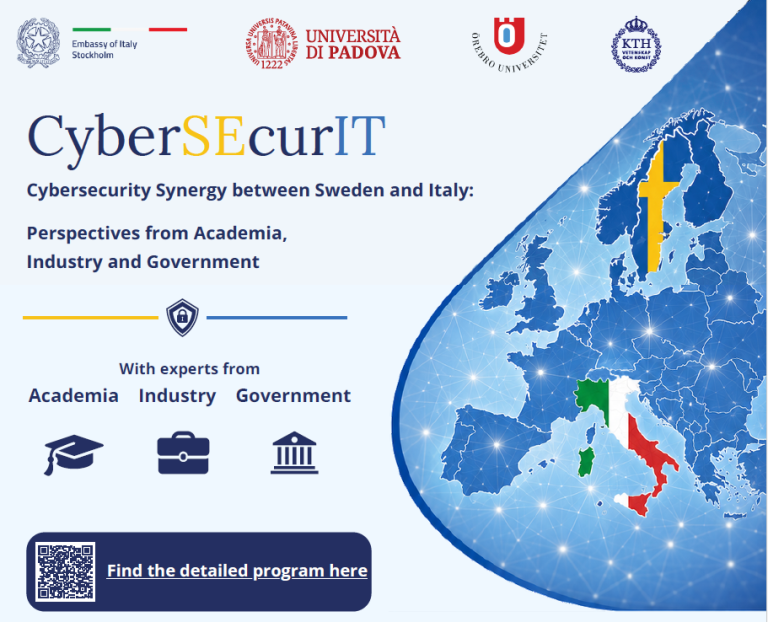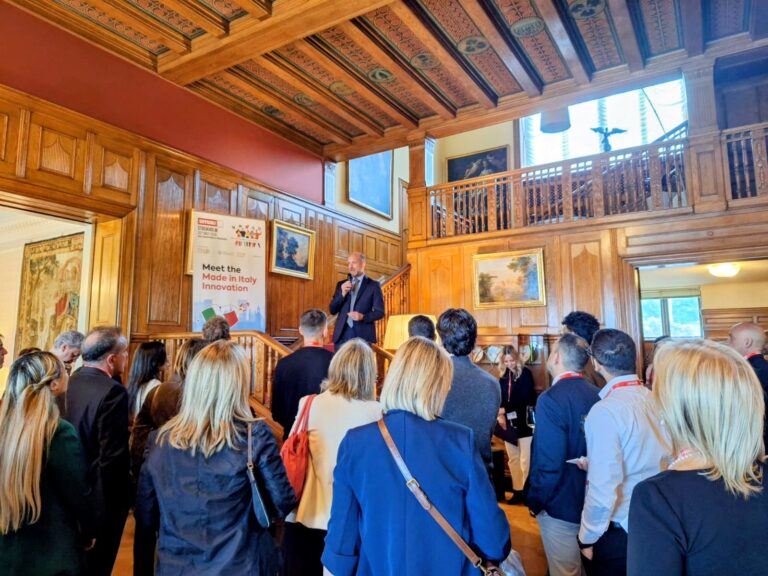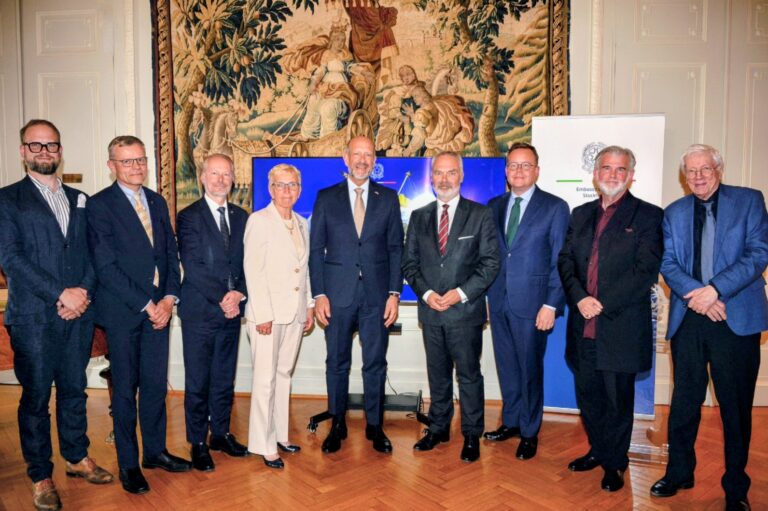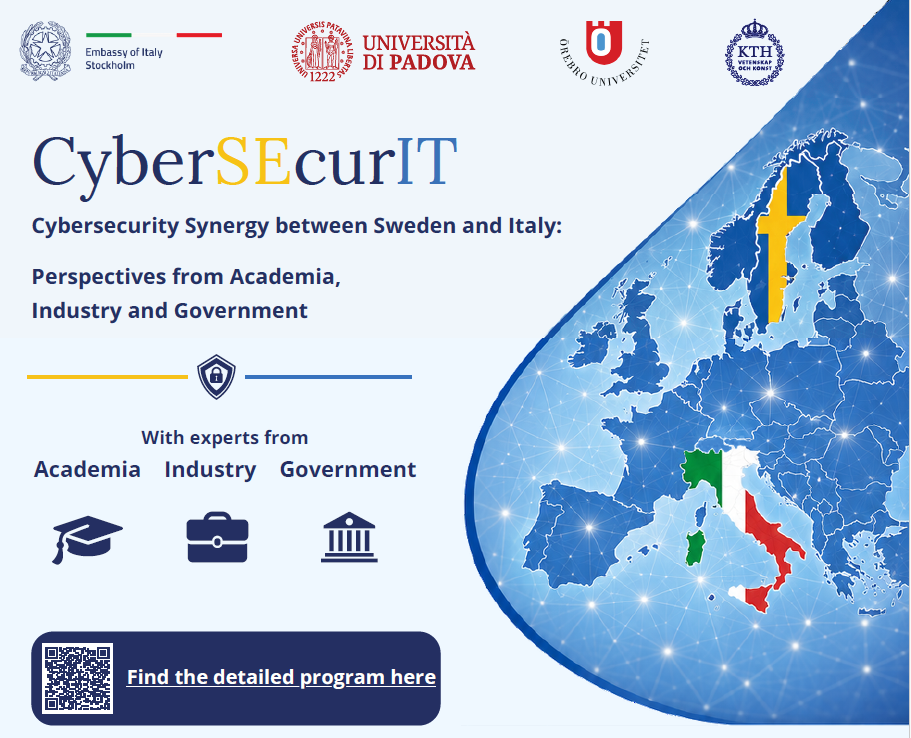
In the context of current global challenges, all now required to ensure secure and “non-vulnerable” technological ecosystems. Cybersecurity is therefore also a strategic element in the dialogue between Italy and Sweden. To better support the bilateral collaboration, the event “CyberSEcurIT – Cybersecurity Synergy between Sweden and Italy: Perspectives from Academia, Industry, and Government” was held in Stockholm on June 22 and 23, 2026, dedicated specifically to cybersecurity. Organized by research groups from the University of Padua, Örebro University, and the Royal Institute of Technology (Kungliga Tekniska högskolan – KTH), in collaboration with the Italian Embassy, the meeting was hosted at the Italian Embassy and at the KTH campus.
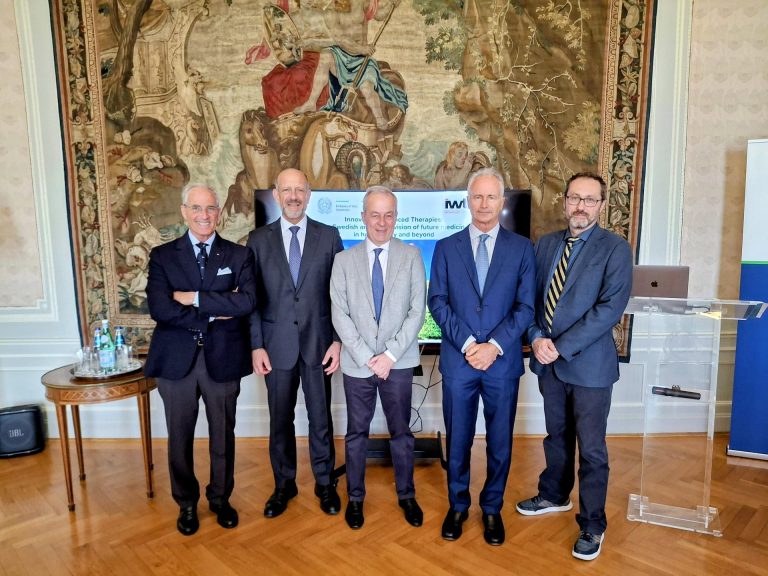
Ambassador Michele Pala, welcoming participants at the event, emphasized the relevance of the meeting: “Italy certainly contributes with industrial capabilities and leadership to the European effort to build secure technology ecosystems. However, it is increasingly important to establish solid, strategic partnerships, and the Nordic countries, particularly Sweden, now a joint member of NATO, can contribute with its high-tech industrial assets and telecommunications giants.”
Amy Loutfi, Professor at Örebro and Linköping Universities and Director of the Wallenberg AI, Autonomous Systems and Software Program (WASP), Monica Fedeli, Vice-Rector for the Third Mission at the University of Padua, and Bernardo Palazzi, Advisor to the National Cybersecurity Agency (ACN), introduced the works of the meeting that had presentations by Fredrik Heintz of Linköping University, coordinator of the RESIST (Resilience and Security for Trust AI) program, who discussed “AI, Cyber Security, and Geopolitics,” Paolo Spagnoletti of LUISS University and President of the Cyber 4.0 Competence Center, who described the methods for building “Cyber Capacity” in today’s world, Panagiotis Papadimitratos, who illustrated the initiatives of KTH and the Swedish system in the field of cybersecurity, while Luigi Mancini of Sapienza University of Rome presented the European digital structures in terms of cybersecurity and resilience.
The day ended with two speakers from the industrial word: David Brossard of Axiomatics, the Swedish company recently acquired by LEONARDO, and Dario Pascucci of Thales Alenia Space Italy.
The second day hosted several academic contributions: Nicola Laurenti of the University of Padua; Simin Nadjm-Tehrani of Linköping University; Alessio Merlo of the Centro Alti Studi Difesa (CASD); Henrik Sandberg of the Digital Futures Center and Giulio Foletto both of KTH. After, three industrial players contributed: Mohammad Loni of Volvo Autonomous Solutions, Paolo Carrano of APS Security, and Luca Moroni of Cyber Security Angels (CSA). A section with highly dynamic Italian and Swedish spin-offs in this sector followed: SpritzMatter and ThinkQuantum of the University of Padua, and Canary Bit of Lund University.
The event also hosted an important panel discussion coordinated by Professor Mauro Conti of the University of Padua and WASP Guest Professor at Örebro on the topic of “Governing Cybersecurity and the Role of Academia” with the participation of the Ambassador Michele Pala, of the Scientific Attache` Augusto Marcelli, of Bernardo Palazzi and Panagiotis Papadimitratos.
The goal of strengthening the existing collaboration between Italy and Sweden in the field of new technologies related to cybersecurity, essential elements of the social architecture and democratic behavior of our countries, was certainly achieved. The two-day event was attended by approximately 40 experts from both academy and industry that offered their perspectives on research and opportunities. Methods and possibilities for strengthening and expanding the collaboration between the two countries in the field of cybersecurity were also discussed.