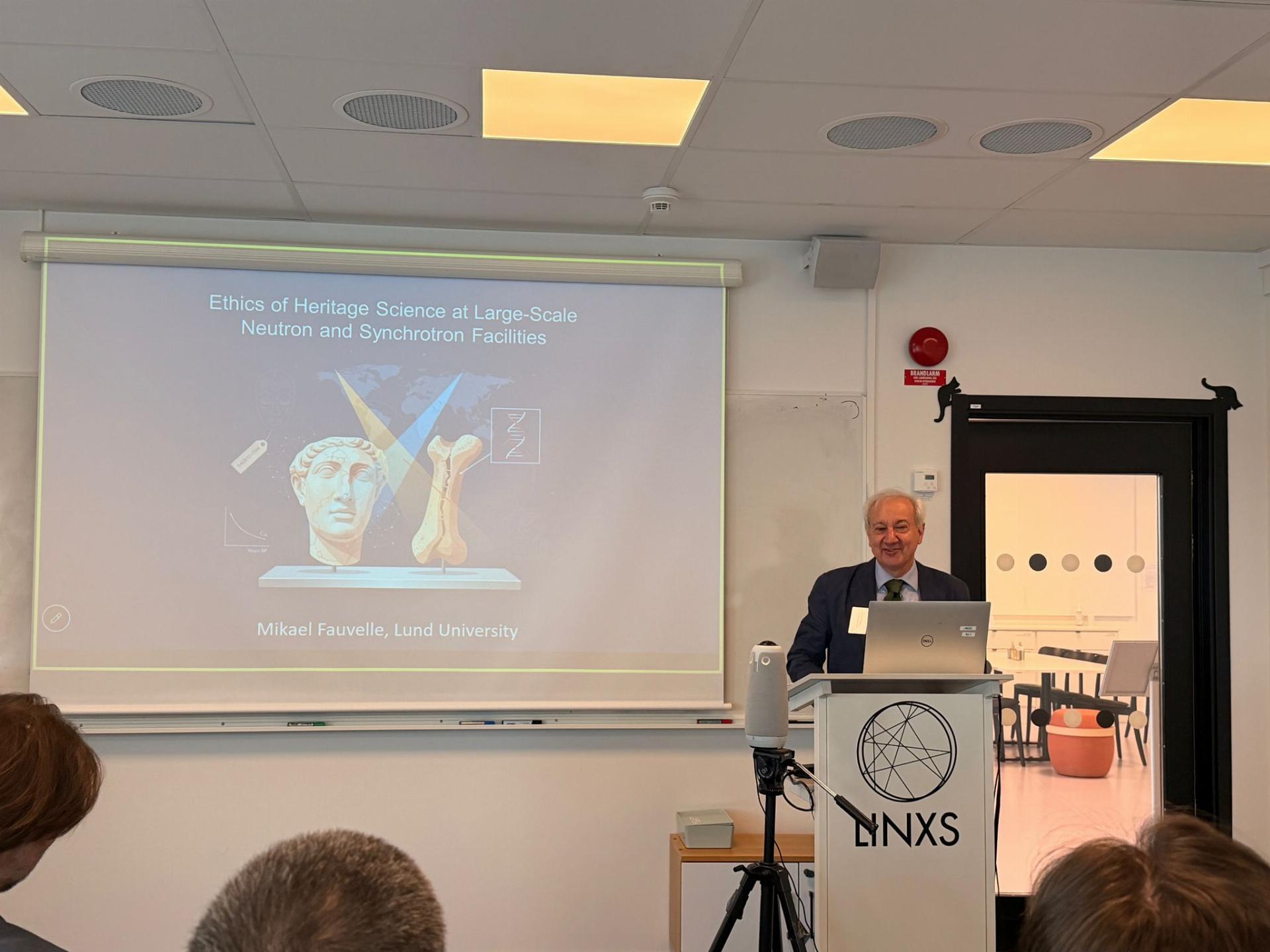
On May 20 and 21, 2026, the international conference “Ethics of Heritage Science at Large-Scale Neutron and Synchrotron Facilities” took place in Lund.
This event, sponsored by the Italian Embassy, was a unique opportunity for experts from around the world to discuss the ethical implications of various techniques used for the study and protection of cultural heritage, including those that utilize large-scale research infrastructures such as Maxiv and the European Spallation Source (ESS), which Sweden now makes available to a broad community of researchers. Are there truly “non-destructive” techniques, and what considerations are essential for the study and conservation of cultural heritage? These are just two of the many questions we must ask ourselves whenever we plan a study on cultural heritage, and they were addressed—perhaps for the first time in such a direct manner—during the two-day event organized by the Linxs Institute in Lund. As emphasized by the Scientific Attaché of the Italian Embassy, conveying greetings from Ambassador Michele Pala, “Italy is home to over 60% of the world’s artistic treasures, playing a central role in the study and conservation of cultural heritage thanks to the incredible density and diversity of its assets: archaeological, architectural, and artistic.
Ours is one of the countries with the highest number of UNESCO World Heritage sites, making it a global benchmark for conservation practices, a pioneer in conservation and training processes, and an absolute leader—through its archaeological research groups—in the protection of historical cultural heritage in numerous conflict zones, linking culture to peacekeeping.” The distinguished Italian presence at the conference was represented firsthand by Laura Longo of Ca’ Foscari University and Luca Bondioli of the University of Padua, as well as by other Italians attending the conference who work at major international institutions and world-renowned museums.
Sweden’s leadership in digitization and open access within the cultural heritage sector is shaping international standards, actively contributing not only to research but also to the preservation of cultural heritage. This event demonstrated once again that Italy and Sweden can help improve the European ecosystem of research and innovation—including in the cultural heritage sector—by attracting international students and professionals. We are, and we want to continue to be, two leading countries in Europe and globally in the study of cultural heritage, and in new technologies for the preservation and management of assets that are invaluable to the history and culture of society.